
When Everyone Knows
And why it changes what organizations can do.
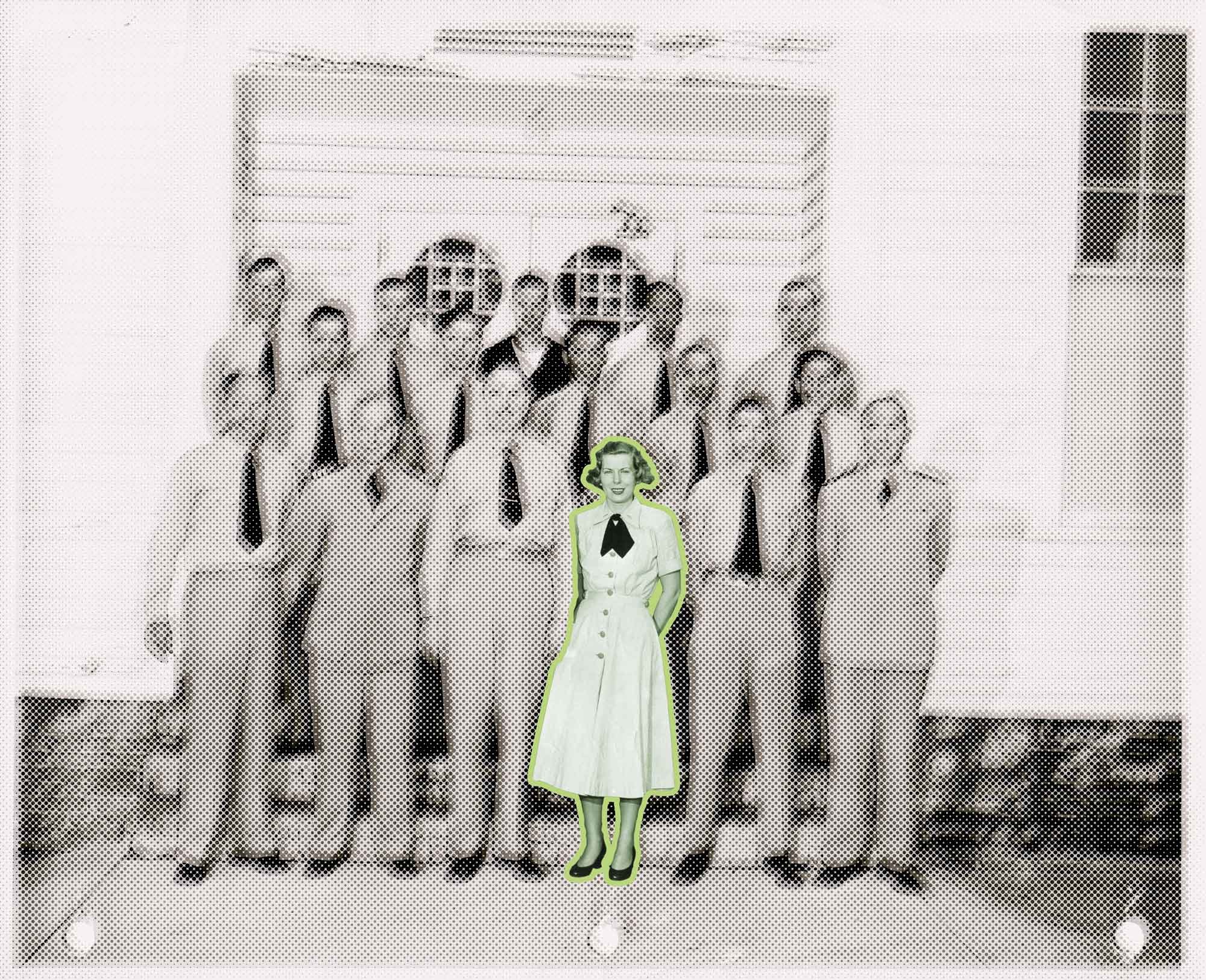
There is a difference between people knowing something and people knowing that others know it. That difference, or common knowledge, is the subject of Steven Pinker’s When Everyone Knows That Everyone Knows.
Pinker argues that much of social life depends not just on shared information, but on shared awareness of that information. It is not enough that we both know something. For coordination to happen, we must know that we both know it and know that we both know that we both know it.
This recursive structure of awareness is at the root of social norms, political movements, markets, and institutions.
What Pinker Actually Argues
Drawing on linguistics, evolutionary psychology, game theory, and political science, Pinker explains how humans solve coordination problems in groups. He shows that:
Social norms can persist privately until they are publicly acknowledged. Once named, their status changes.
Taboos and euphemisms allow societies to signal awareness without fully committing to public acknowledgment.
Financial markets operate on expectations about others’ expectations.
Authoritarian regimes often endure because dissent remains private. When opposition becomes common knowledge, collective action becomes possible.
Revolutions frequently appear sudden. Pinker’s point seems to be that dissatisfaction often predates the visible event; what shifts is the public recognition that others share it.
He also argues that human communication evolved mechanisms, like eye contact, tone, ritual, ceremony, and contracts establish common knowledge. Public statements change what people can reasonably expect from one another.
Institutions rely on this shared awareness.
The Tension Pinker Identifies
Common knowledge constrains behavior. Once something is publicly acknowledged, it alters incentives and reputations. It may require response. For that reason, people often maintain strategic ambiguity. A truth may be widely understood but left unstated. As long as it is not common knowledge, flexibility remains.
Pinker’s contribution is to show that the shift from private knowledge to common knowledge is a consequential threshold.
Why This Matters in Organizations
Pinker’s analysis explains how societies coordinate at scale. The same logic shows up inside organizations, especially under complex conditions. In complex organizations, breakdowns frequently happen because shared awareness is misaligned. Consider situations where:
• Many leaders privately doubt a failing initiative • Multiple teams recognize a cultural problem •
• Analysts see that a metric is being manipulated • Executives suspect a strategic risk •
If these recognitions remain private, the organization continues as if alignment exists. Meetings keep happening. Dashboards update. Decisions continue as they always have. The issue is the absence of common knowledge.
Shared Sensemaking Under Difficult Conditions
In environments marked by complexity, ambiguity, uncertainty, and constraint, interpretation matters as much as data. Shared sensemaking requires more than exchanging updates. It involves:
Surfacing assumptions
Comparing interpretations
Clarifying disagreement
Making explicit what is acknowledged
Without that final step of explicit acknowledgment, coordination remains fragile. Silence can mean agreement, confusion, or avoidance. Without clarity about shared awareness, teams misread one another.
The Leadership Function
One of the most consequential leadership acts is converting private recognition into common knowledge for shared sensemaking. This may involve:
Naming a constraint directly
Acknowledging uncertainty rather than implying certainty
Stating trade-offs clearly
Making assumptions visible
These moves change the expectations within which people operate. They clarify what can be discussed, what must be addressed, and what is no longer plausible to ignore.
In high-reliability settings such as aviation, healthcare, and energy operations, shared situational awareness depends on more than access to data. Team members must understand how others are interpreting that data. That recursive awareness enables coordinated action under pressure. The same principle applies in executive contexts.
A Diagnostic Question
If you want to assess whether common knowledge is present in your organization, ask:
What concerns are discussed informally but not formally?
Which risks are assumed but not documented?
Where might silence be mistaken for agreement?
What assumptions have never been publicly tested?
Where common knowledge is absent, coordination slows. Decisions become cautious or misaligned. Under pressure, those gaps widen.
Pinker’s analysis clarifies a pattern many leaders experience but struggle to articulate. Organizations function not only on shared information, but on shared awareness of that information. When that awareness is explicit, collective action becomes more coherent. When it is ambiguous, alignment is easily overstated.
References
Pinker, S. (2021). When everyone knows that everyone knows: Common knowledge and the mysteries of money, power, and everyday life. Viking.